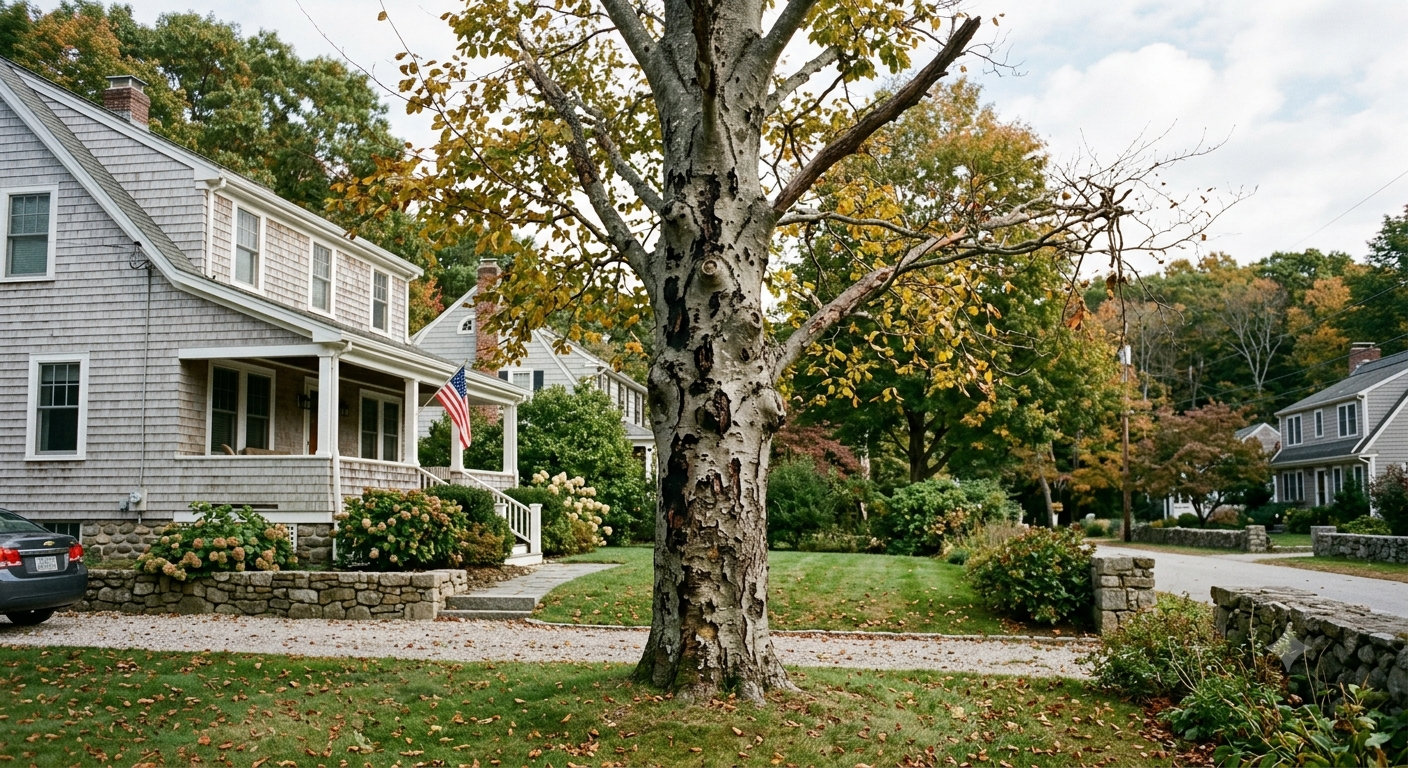
Declining Trees That Need Diagnosis
Tree Disease Management in Cranston and surrounding areas for stopping infections before they spread to healthy specimens
Discoloration, premature leaf loss, branch dieback, and unusual growth patterns signal that a tree is fighting an infection, but identifying the specific disease and determining the right treatment requires understanding how different pathogens attack trees and what conditions allow them to spread. Edgewood Tree Service addresses tree diseases throughout Cranston, Providence, Warwick, and neighboring communities, by diagnosing the problem, recommending treatment based on tree condition, and monitoring progress to preserve healthy trees whenever the infection hasn't progressed beyond recovery. Catching disease early often means the difference between saving a mature tree and watching it decline to the point where removal becomes the only option.
Common signs include leaf spots that expand and merge, cankers that girdle branches, wilting despite adequate moisture, and dieback that starts at branch tips and moves toward the trunk. Fungal diseases often show up as visible growths on bark or roots, while bacterial infections may cause oozing, discolored bark, or sudden limb death, and each pathogen requires a different management approach.
Request a tree health evaluation to determine what's affecting your trees and what treatment options are available.
How Disease Identification Protects Surrounding Trees
The diagnostic process examines symptom patterns, recent weather conditions, and site factors like soil drainage and canopy density, all of which influence how diseases develop and spread. Some infections move through root grafts between nearby trees, while others spread through airborne spores or insect vectors, and knowing the transmission method shapes the treatment strategy and determines whether surrounding trees need preventive care.
Once the disease is identified, you see recommendations tailored to the severity of infection and the tree's overall vigor—whether that involves fungicidal treatment for active infections, pruning to remove diseased tissue and improve air circulation, soil amendments to reduce stress, or removal if the disease has compromised structural integrity. Regular monitoring confirms whether the treatment is halting progression or whether additional steps are needed.
Treatment plans also consider the value of the affected tree, the risk to nearby specimens, and whether the disease is manageable long-term or likely to require repeated interventions. Some infections can be controlled with proper care, while others inevitably lead to decline despite treatment, and the evaluation helps property owners understand which situation they're facing.
Common Questions About This Service
Understanding how tree disease management works helps property owners decide when professional diagnosis and treatment are necessary.
Edgewood Tree Service provides accurate disease diagnosis and treatment planning that protects both affected trees and surrounding landscape investments. Call (401) 696-9677 to arrange an evaluation and receive specific recommendations for your property.
What are the most common tree diseases affecting Cranston properties?
Anthracnose, which causes irregular brown patches on leaves and twig dieback, and various root rot fungi that thrive in poorly drained soils common throughout the region, are frequently diagnosed, along with bacterial leaf scorch and canker diseases that target stressed trees.
How quickly do tree diseases spread to nearby trees?
Transmission speed depends on the pathogen—root diseases spread slowly through underground contact, while foliar diseases can move rapidly during wet, humid conditions that are typical in Rhode Island's spring and early summer.
What does treatment typically involve once a disease is diagnosed?
Depending on the infection, treatment may include removing infected branches, applying fungicides during active growth periods, improving soil drainage to reduce root stress, or installing barriers to prevent root-to-root transmission between trees.
When should a diseased tree be removed instead of treated?
Removal becomes necessary when the infection has killed more than half the canopy, compromised structural integrity to the point of hazard, or when the disease is highly contagious and threatens valuable nearby trees that can't be effectively protected.
How do you monitor treated trees to confirm the disease is controlled?
Follow-up inspections track new growth patterns, check for symptom recurrence, and assess whether the canopy is recovering or continuing to decline, with adjustments to the treatment plan made based on observed response.